


Ready to tackle mainframe security? This information breaks down what IT leaders should know about protecting their vital IT infrastructure.
1. What is mainframe vulnerability management?
Mainframe vulnerability management is the process of locating, assessing, and addressing your threats on the mainframe to ensure the security and integrity of critical systems and data.
Why does your mainframe vulnerability management matter?
Cyberthreats are evolving at a hair-raising pace, making the security and integrity of your mainframe more important—and precarious—than ever. Mainframes are the unsung heroes of enterprise operations, powering critical applications and safeguarding sensitive information. But with great responsibility comes great risk. These systems are a prime target for cyberattacks. Did you know that 76% of organizations experienced a cybersecurity breach in the last year, with many attacks exploiting unpatched vulnerabilities?
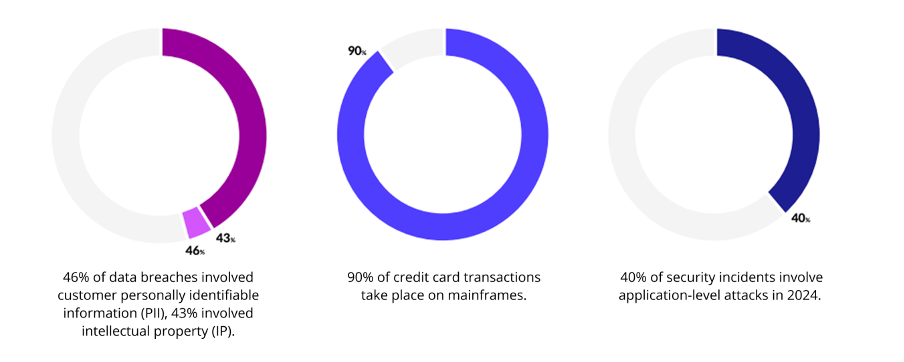
Effective vulnerability management is no longer optional; it’s essential. This means continuously monitoring for potential threats, assessing vulnerabilities and understanding their severity, and taking decisive action, through steps like patches, software updates, and tightening access controls.
Every proactive step is a shield against unauthorized access, data breaches, and costly operational disruptions. The mainframe powers your work — until an unmanaged vulnerability weakens it.
2. Regulatory compliance
Vulnerability management is key to staying compliant by identifying and addressing security weaknesses. Many regulations require secure systems and data protection, including:
- GDPR: Mandates data protection and privacy for individuals in the EU, or any organization doing business in the EU.
- HIPAA: Requires safeguarding sensitive healthcare information.
- PCI DSS: Ensures secure handling of payment card data.
Effective vulnerability management helps reduce your data breach risks, apply regular patches, and show proactive security during audits. Neglecting it can lead to fines, legal issues, and reputational damage. The stakes couldn’t be higher: non-compliance costs nearly three times more than compliance.
3. Rising threats
New risks are surfacing as technology evolves, posing challenges that weren’t as significant in the past. Today’s cybercriminals compromise your mainframe’s data security with:
- Sophisticated cybercriminals: Attackers are deploying tactics with an intensifying ruthlessness, growing more skillful with malware, ransomware, and exploiting zero-day vulnerabilities, to target mainframe systems. These attacks are becoming more difficult to detect and mitigate, posing significant risks to critical infrastructure.
- Insider threats: Employees, contractors, or other insiders with legitimate access misuse their privileges intentionally or unintentionally, leading to internal security risks. These threats are particularly challenging as they stem from trusted individuals already within the system.
- Integration with cloud and APIs: As mainframes are increasingly integrated with cloud services and APIs to support modernization efforts, they experience greater exposure to external threats. This expanded attack surface requires robust security measures to prevent unauthorized access and breaches.
- AI-driven threats: Cybercriminals are leveraging artificial intelligence to develop more sophisticated and adaptive attacks. From automated vulnerability scans to highly targeted adaptive malware, AI is being weaponized to breach even the most secure environments.
- Regulatory pressures: The growing complexity of compliance requirements in industries like finance, healthcare, and government adds significant pressure to keep mainframes secure. Organizations must ensure their systems meet stringent regulations, while maintaining robust defenses against evolving threats.
- Financial backing for cybercriminals: The increasing financial support for cybercriminal organizations has exacerbated the threat landscape. Well-funded attackers can invest in advanced technologies, hire skilled professionals, and develop sophisticated tools to exploit vulnerabilities in critical mainframe systems. This influx of resources enables persistent and targeted attacks, raising the challenge for organizations to defend their infrastructure effectively.
Staying ahead of these evolving challenges is critical to maintaining the security and stability of mainframe operations.
Read the full guide here, which includes:
- How a vulnerability management program addresses threats to the mainframe.
- Best practices for effective vulnerability management.
- Additional resources, such as a demo, checklist, whitepaper, and tips to identify vulnerabilities.
Every proactive step you take is a shield against unauthorized access, data breaches, and costly operational disruptions. The mainframe powers your work—until an unmanaged vulnerability weakens it.